Skip to content
Confused about towel types? Using a bath towel at the beach is a sandy, soggy mistake. Let’s break down the real differences so you get it right every time.
The key difference lies in their purpose. Bath towels are thick, plush, and highly absorbent for drying off after a shower. Beach towels are typically larger, thinner, and made to dry quickly in the sun, while also resisting sand and featuring vibrant, decorative designs.
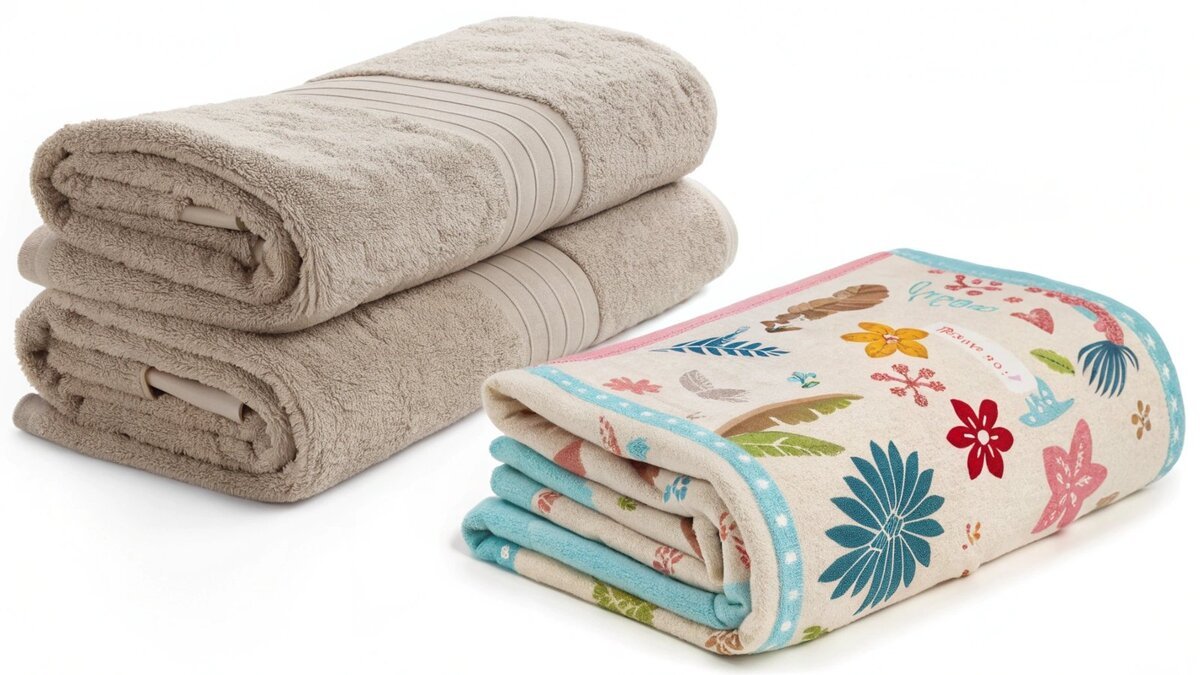
So, they look similar, but their jobs are completely different. As a brand owner or buyer, knowing these details is crucial for creating a product your customers will love. It’s not just about a towel, but about the experience you’re selling. Let’s dive into the questions I hear most often from clients at TowelTrend. This will help you decide which towel is right for your brand’s next launch.
Can I use a beach towel as a bath towel?
Your fluffy bath towel is in the wash and that vibrant beach towel looks tempting. But will it actually dry you off, or just feel thin and unsatisfying?
Yes, you can use a beach towel as a bath towel in a pinch, but it’s not ideal. It is less absorbent and plush than a standard bath towel. It will get you dry, but it won’t provide the same luxurious, spa-like feel you expect after a shower.
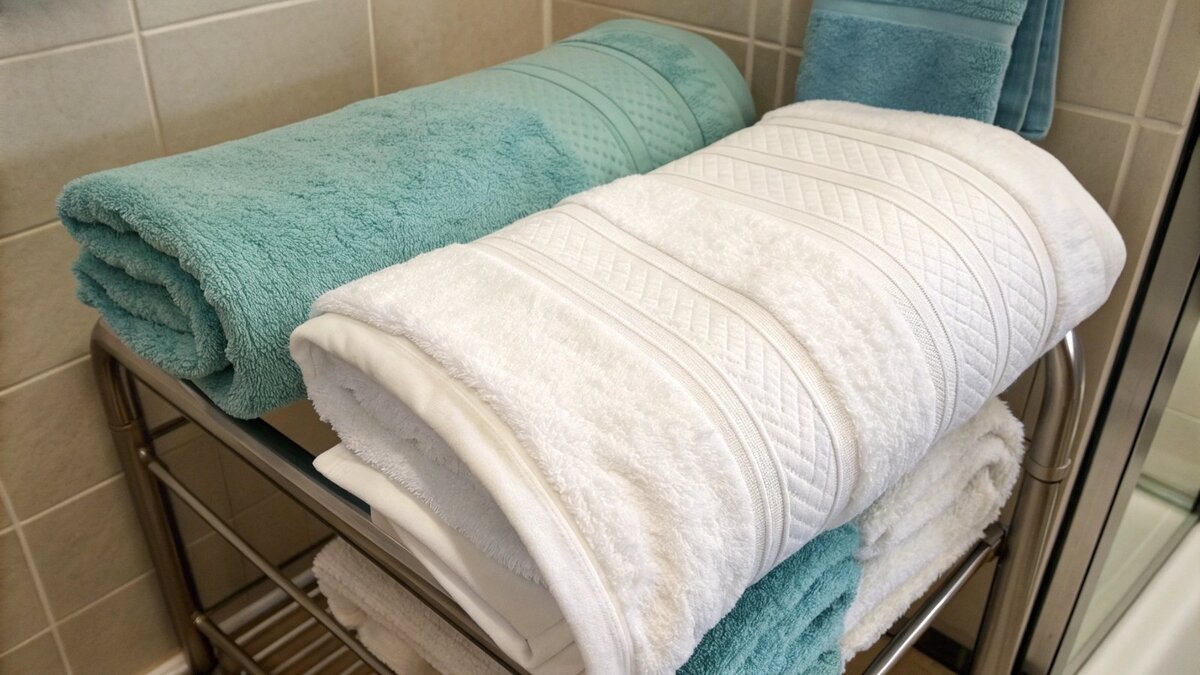
The difference really comes down to construction and material choice, things we obsess over with our clients. When you use a beach towel in the bathroom, you immediately notice two things: how it feels and how well it absorbs.
Absorbency and Feel
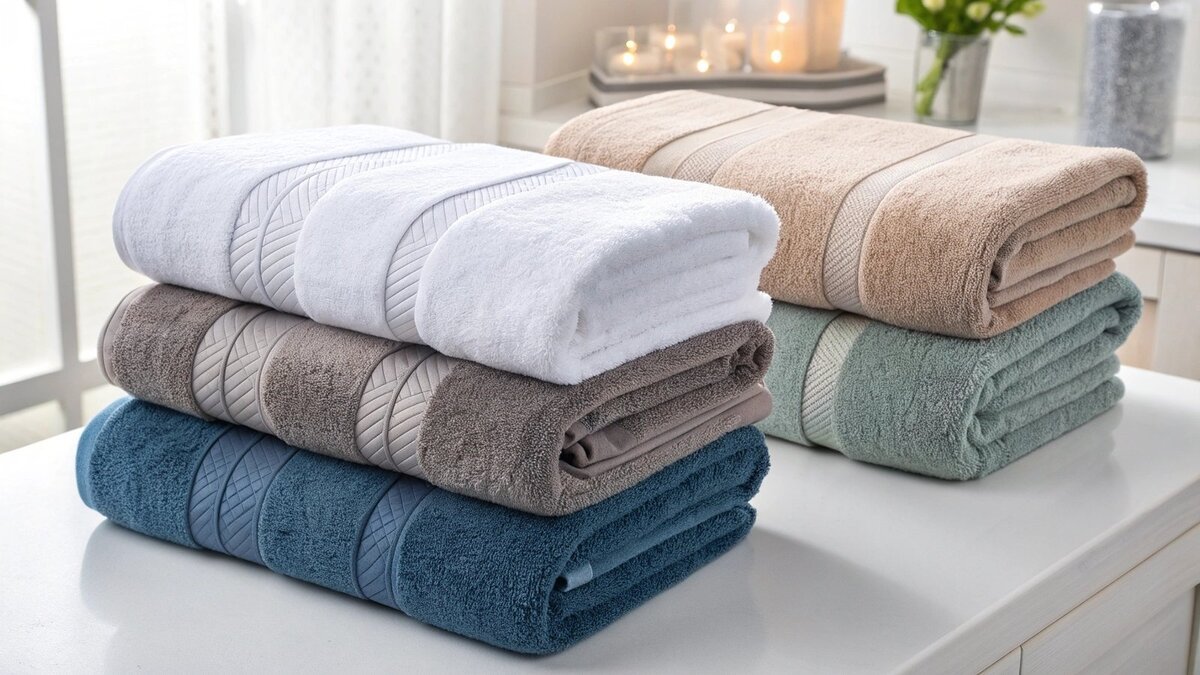
A good bath towel feels thick and thirsty. This is because it’s typically made with a high density of cotton loops, measured in Grams per Square Meter (GSM). A premium bath towel from our factory is usually between 500 and 700 GSM. This heavy construction is designed to soak up a lot of water quickly.
A beach towel, on the other hand, often has one side with a velour finish. We create this by shearing the tops off the cotton loops. This makes the surface soft for lounging and creates a perfect canvas for printing bright, detailed logos. The tradeoff is that this velour side is much less absorbent. The entire towel is also thinner, often around 350-450 GSM, because its main job is to dry fast in the sun, not soak up shower levels of water.
Why It Matters for Brands
I once worked with a boutique hotel chain that was considering a "one-towel-for-all" approach to simplify inventory. They wanted a towel that could be used for both the pool and the bathroom. We developed a hybrid, but the feedback was clear: guests felt the towels were not plush enough for the shower. The perception of luxury was lost. This shows that you have to match the towel to the experience you’re selling.
| Feature | Beach Towel | Bath Towel |
|---|---|---|
| Primary Use | Outdoor, lounging, poolside | Indoor, drying after a bath/shower |
| Absorbency | Moderate | High |
| Texture | Often velour on one side, looped on the other | Plush loops on both sides |
| Post-Shower Feel | Less cozy, thinner | Soft, warm, and luxurious |
Is a beach towel a normal towel?
A towel is a towel, right? You see them all in the linen department. But calling a beach towel "normal" oversimplifies its very specific design and purpose.
A beach towel is a specialized type of towel, not a "normal" or standard bath towel. Its larger size, thinner profile, and vibrant designs are all purpose-driven features for outdoor beach or pool use, distinguishing it from towels intended for your bathroom.
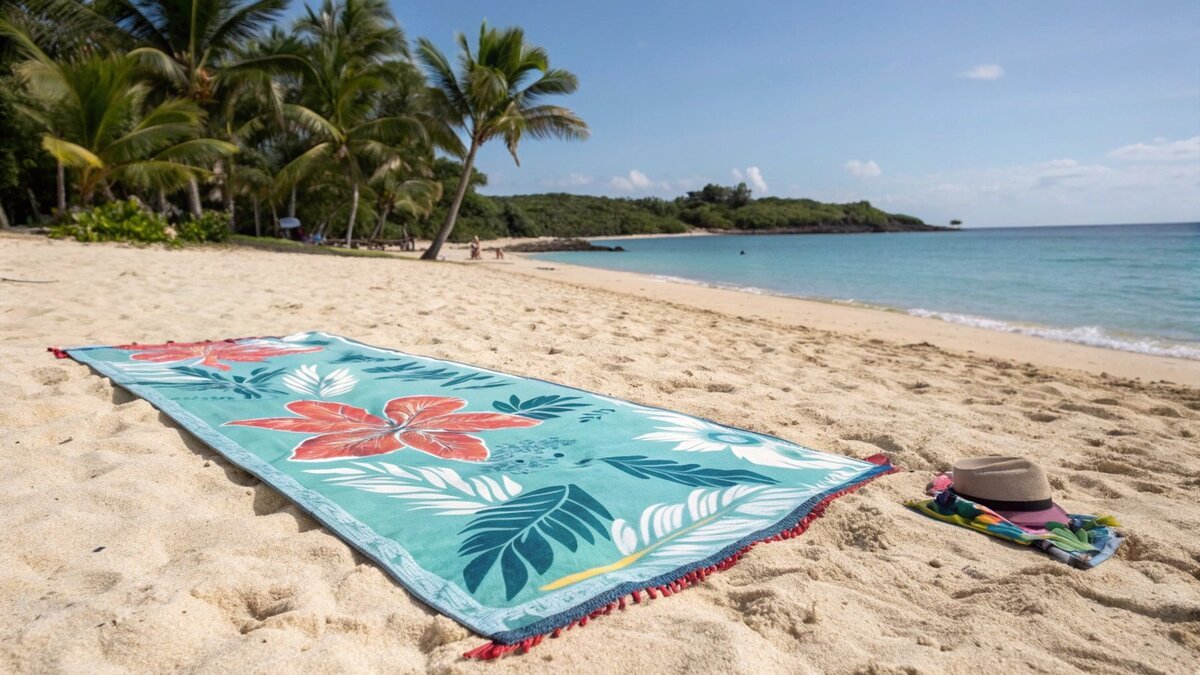
From a manufacturing standpoint, a beach towel is an entirely different product category. Its specifications are tailored for an environment where a bath towel would fail. Think of it as a specialized tool. You wouldn’t use a hammer to turn a screw.
Size and Design
The most obvious difference is size. A standard bath towel measures around 27" x 52". We make them this size so they are easy to handle and hang in a bathroom. A beach towel is much larger, usually starting at 30" x 60" and going up from there. I remember a client from Australia who runs a surf-inspired brand. For them, a huge 40" x 70" towel was essential. It wasn’t just for drying off; it was a personal space on the sand. The extra size is for lounging, not just drying.
Material and Construction
A "normal" towel is all about function: absorbency and softness. A beach towel is about function and fashion. This is where the design comes in. Beach towels are a canvas for branding. We use techniques like reactive printing to create vivid, complicated designs that won’t fade in the sun or feel scratchy. A standard bath towel usually comes in solid, piece-dyed colors to create a serene, spa-like atmosphere. The different production methods alone make them distinct products.
| Aspect | "Normal" Bath Towel | Specialized Beach Towel |
|---|---|---|
| Size | Standard (covers the body) | Oversized (for lying on) |
| Thickness | Thick (High GSM for absorbency) | Thinner (Lower GSM for quick drying) |
| Design | Solid colors, simple dobby borders | Vibrant, complex prints, and patterns |
| Construction | Terry loops on both sides | Often terry on one side, velour on the other |
Are beach towels good shower towels?
You’re thinking of stocking your short-term rental or gym with just one towel type. Using beach towels for showers might seem smart, but it could lead to poor guest reviews.
No, beach towels are not good shower towels for regular use. Their lower absorbency and thinner pile mean they get saturated quickly and don’t provide the plush, absorbent experience people want after a shower. They simply aren’t designed for that level of water absorption.

This is one of the most common questions from new hospitality clients, and my answer is always a strong "no." Using the wrong towel can seriously damage a customer’s perception of your quality. It’s a small detail that has a huge impact.
The Performance Test
The difference is scientific. As I mentioned, it comes down to GSM. A bath towel, with its high GSM (500+), has more cotton fibers per square meter. These fibers act like a sponge, pulling water away from your skin. A beach towel, with its lower GSM (around 400), has fewer fibers. It can’t hold as much water. When you use it after a shower, it gets soaking wet fast and you end up feeling damp. I once had a gym client who tried to save money by ordering low-GSM towels. Their members immediately complained that the towels "just moved water around." They were technically towels, but they weren’t doing their job.
Customer Experience is Everything
Beyond pure function, think about the experience. After a hot shower, people expect the comfort of a thick, soft towel. It’s a moment of small luxury. Handing them a thin, lightweight towel feels cheap. It communicates that you cut corners. Even if the towel is beautifully designed, its performance in that moment is what matters. In a steamy bathroom, a beach towel also won’t dry properly between uses, increasing the risk of it feeling damp or smelling musty for the next person. For any business that provides amenities, the bath towel is a key touchpoint for quality.
What is an alternative to bath towels?
Tired of bulky, slow-drying cotton bath towels? They can feel dated and impractical for a modern brand. But you don’t want to sacrifice absorbency or comfort.
Excellent alternatives to traditional cotton bath towels include Turkish towels (pestemal), waffle weave towels, and microfiber towels. Each offers a unique combination of high absorbency, quick-drying properties, and a lightweight feel, catering to different lifestyle and branding needs.

The classic thick terry towel isn’t the only option anymore. At TowelTrend, we work with many brands looking for something different to stand out. Here are three of my favorite alternatives that we produce.
Turkish Towels (Pestemal)
These are a game-changer. Made from Turkish cotton with extra-long fibers, they are incredibly absorbent yet very thin and light. They also get softer and more absorbent with every wash. They pack down small, making them perfect for minimalist homes, travel-focused brands, or spas. We can weave intricate custom patterns and brand logos directly into the fabric, which our clients love.
Waffle Weave Towels
I use these in my own home. The unique 3D waffle pattern creates a larger surface area, which helps it absorb water surprisingly well. That same texture also allows air to circulate, so it dries much faster than a plush terry towel. They offer a clean, modern, and sophisticated look that’s become very popular with boutique hotels and home goods brands.
Microfiber Towels
For brands targeting an active lifestyle, microfiber is unbeatable. It’s a synthetic material that can hold many times its weight in water and dries in a fraction of the time of cotton. They are the lightest and most compact option, ideal for gyms, yoga studios, and camping brands. Plus, the smooth surface is perfect for high-definition sublimation printing, allowing for photorealistic designs.
| Towel Alternative | Best For | Key Benefits | Branding Angle |
|---|---|---|---|
| Turkish (Pestemal) | Travel, Spa, Home | Lightweight, quick-drying, gets softer | Eco-luxury, minimalist |
| Waffle Weave | Home, Boutique Hotel | Very absorbent, fast-drying, textural | Modern, sophisticated |
| Microfiber | Gym, Sports, Camping | Ultra-absorbent, super lightweight | Active, practical, vibrant |
Conclusion
Choosing between a beach and bath towel depends on its final use. Understanding these differences helps you create a product that perfectly meets your customer’s specific needs and expectations.