Skip to content
You love your car’s mirror-like finish, but you worry an improper wash could ruin it. The wrong towel can leave nasty scratches, undoing all your hard work and care.
A high-quality, clean microfiber towel will not scratch your car paint. Scratches almost always come from trapped dirt and debris on a dirty towel, or from using a low-quality cloth. The towel itself is designed to be exceptionally safe and effective on automotive finishes.
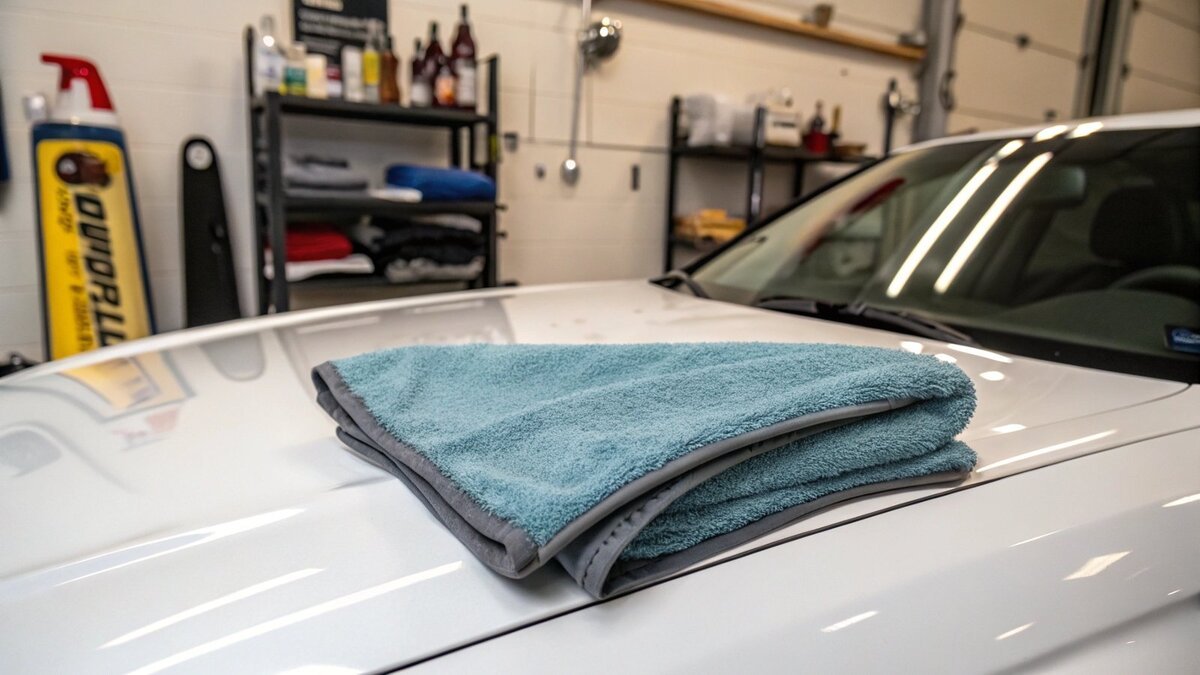
Choosing the right towel is one of the most important decisions you can make for your car’s appearance. It’s the tool that makes direct contact with your paint more than any other. As someone who has managed production for countless automotive towel brands since 2004, I’ve seen exactly what separates a safe towel from a destructive one. It’s not just about the material, but also its quality, cleanliness, and how you use it. So, how can you be sure the cloth you’re using is truly safe and effective? Let’s break it down together.
Are Microfiber Cloths Safe on Car Paint?
Choosing a cloth for your car can feel like a gamble. A bad choice could mean permanent damage to your expensive clear coat, but the right microfiber is your best defense.
Yes, high-quality microfiber cloths are incredibly safe for car paint. Their unique fibers are engineered to lift dirt away from the surface, not drag it across. This simple function is what makes them far superior to traditional cotton towels for preventing scratches during washing and drying.
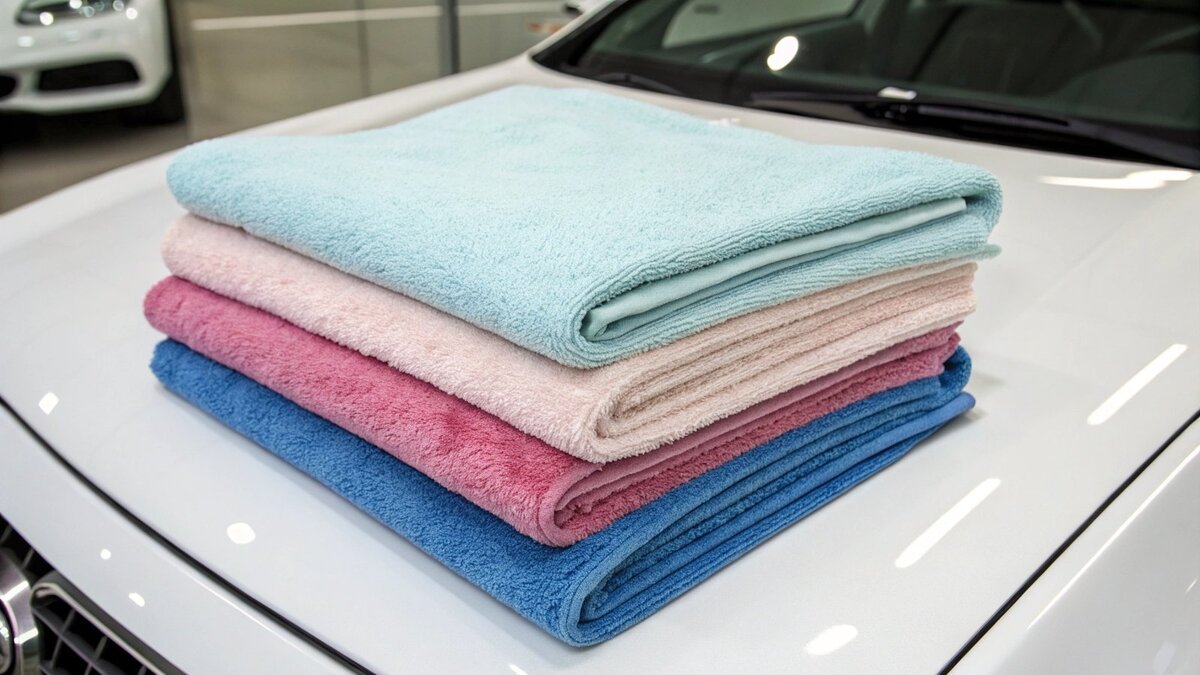
The magic of microfiber lies in its construction. I’ve spent years explaining this to brand owners. The material is typically a blend of polyester and polyamide. During manufacturing, these fibers are split into ultra-fine strands, much thinner than a human hair. This process creates a massive amount of surface area and a static charge that actively attracts dust and dirt particles. Instead of pushing grit around like a cotton towel, a microfiber cloth pulls it deep into its fibers, holding it safely away from your paint. This is why a quality microfiber feels like it "grabs" the surface. It’s working exactly as intended.
The Science Behind the Softness
The polyester provides the structure and durability, while the polyamide adds softness and incredible absorbency. A higher polyamide content usually means a softer, more effective towel. When we produce towels for professional detailing brands, the blend ratio is a critical specification.
Key Factors for Safety
To be safe, a microfiber towel must meet three conditions:
- It must be high-quality: Cheaply made towels may have un-split fibers, making them no better than a basic cloth.
- It must be clean: A towel loaded with old dirt is just sandpaper.
- It must be used correctly: Proper technique is just as important as the tool itself.
Here is a simple comparison:
| Feature | Microfiber | Cotton |
|---|---|---|
| Fiber Structure | Fine, split fibers | Coarse, looped fibers |
| Dirt Trapping | Lifts and traps dirt | Pushes dirt around |
| Scratch Risk | Very Low (when clean) | High |
| Absorbency | Very High | Moderate |
What Towels Don’t Scratch the Car?
You’re searching for that perfect towel to dry your car without leaving a single mark. Many products claim to be safe, but they can deliver disappointing, scratchy results.
The best towels that don’t scratch a car are high-quality, plush microfiber towels. Specifically, look for a high GSM (grams per square meter) count, a blend ratio of 70/30 or 80/20, and an edgeless or silk-banded design to prevent scratching.
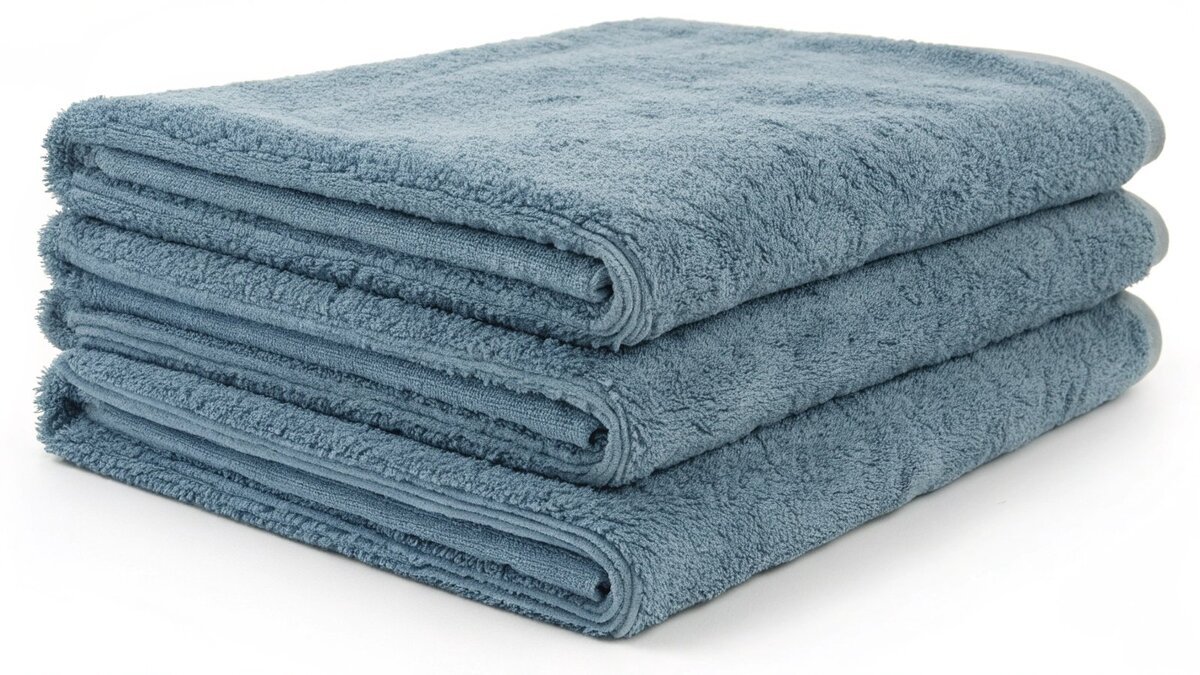
When my clients ask what specs to look for, I always point them to a few key numbers. These are the details that separate a premium, paint-safe towel from a cheap imitation. Understanding them allows you to source towels with confidence, knowing they will perform for you or your customers. The first thing to check is the GSM, or grams per square meter. This is a measure of the towel’s density and weight. For drying and buffing, you want a higher GSM. A towel with a 500 GSM is much plusher and has a deeper pile than a 250 GSM utility towel. This deep pile gives dirt particles a place to go, keeping them far from the paint surface.
Beyond GSM: Blend and Edges
The blend of polyester to polyamide is also vital. An 80/20 blend is a great standard, but a 70/30 blend offers even more softness and absorbency due to the higher polyamide content. Finally, look at the edges. Many cheap towels have a hard, stitched polyester edge that can easily scratch a soft clear coat. That’s why premium auto towels are often "edgeless"—cut with ultrasonic technology—or have a soft silk or microfiber band sewn around the border.
| Specification | Ideal for Detailing | Why it Matters |
|---|---|---|
| GSM | 350-1200 | Higher means more plush, absorbent, and safer for paint. |
| Blend | 70/30 or 80/20 | Polyamide adds the softness and water-trapping ability. |
| Edge | Edgeless or Silk Band | Prevents a hard stitched edge from scratching paint. |
| Weave | Plush, Twist Loop, Waffle | Different weaves are optimized for drying, buffing, or cleaning glass. |
Does Microfiber Cause Swirl Marks?
You washed your car so carefully, but now you see fine, spiderweb-like scratches in the sun. These swirl marks can ruin your car’s finish. Is your microfiber towel to blame?
No, the microfiber material itself does not cause swirl marks. Swirls are micro-scratches created by dragging tiny particles of dirt across the paint. This happens when using a dirty towel, applying too much pressure, or using a poor washing technique, not because of the fibers.

This is one of the biggest misconceptions I hear. People blame the tool when the real issue is the process. Think of a microfiber towel as a net. When it’s clean, it effectively catches and holds onto dirt. But if the net is already full—or if you’re rubbing it hard against the surface—those trapped dirt particles will be dragged across the paint. I’ve seen clients frustrated with swirls, only to realize they were using one or two towels for the whole car, dragging grit from the lower panels onto the hood. A simple change in process made all the difference.
The Real Culprit: Dirt and Technique
The key to a swirl-free wash is keeping your towels clean and letting them do the work. Use the two-bucket wash method, with one bucket for soapy water and another for rinsing your wash mitt. When drying, use multiple, clean, high-GSM towels.
How to Prevent Swirl Marks
To keep your paint perfect, follow these simple rules:
- Use Multiple Towels: Use one towel for upper panels (hood, roof) and a separate one for lower, dirtier panels. Never use a towel that has touched wheels on your paint.
- Fold Your Towel: Fold your drying towel into fourths. This gives you eight clean, plush surfaces to use. Once a section is dirty or saturated, flip to a new one.
- Use Straight-Line Motions: Avoid rubbing in circles. Gently wipe in straight lines, letting the towel absorb the water.
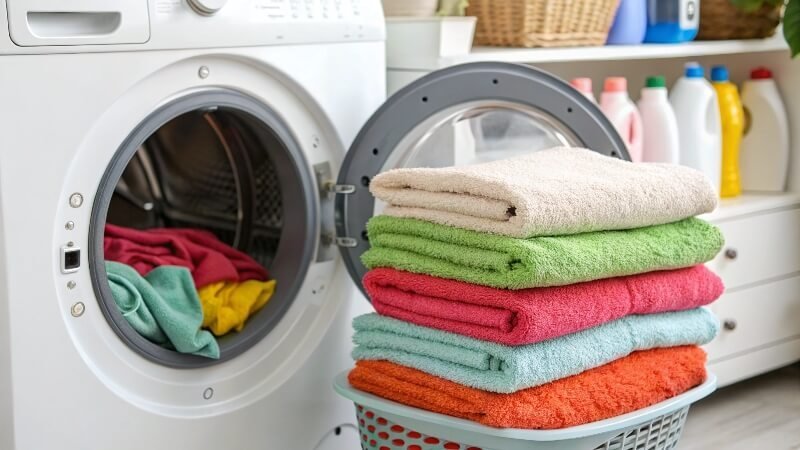
- Wash Towels Properly: Wash microfiber towels separately from other laundry, without fabric softener, which clogs the fibers and ruins their effectiveness.
What Material Doesn’t Scratch Car Paint?
You’re looking past microfiber for a guaranteed scratch-free material. It’s easy to get lost in options, with every material maker claiming that their product is the best.
High-quality microfiber is the single best material that doesn’t scratch car paint. Its split-fiber structure is scientifically designed for this task. Other common materials like cotton terry cloth, old t-shirts, or paper towels are all abrasive and will inevitably cause damage.
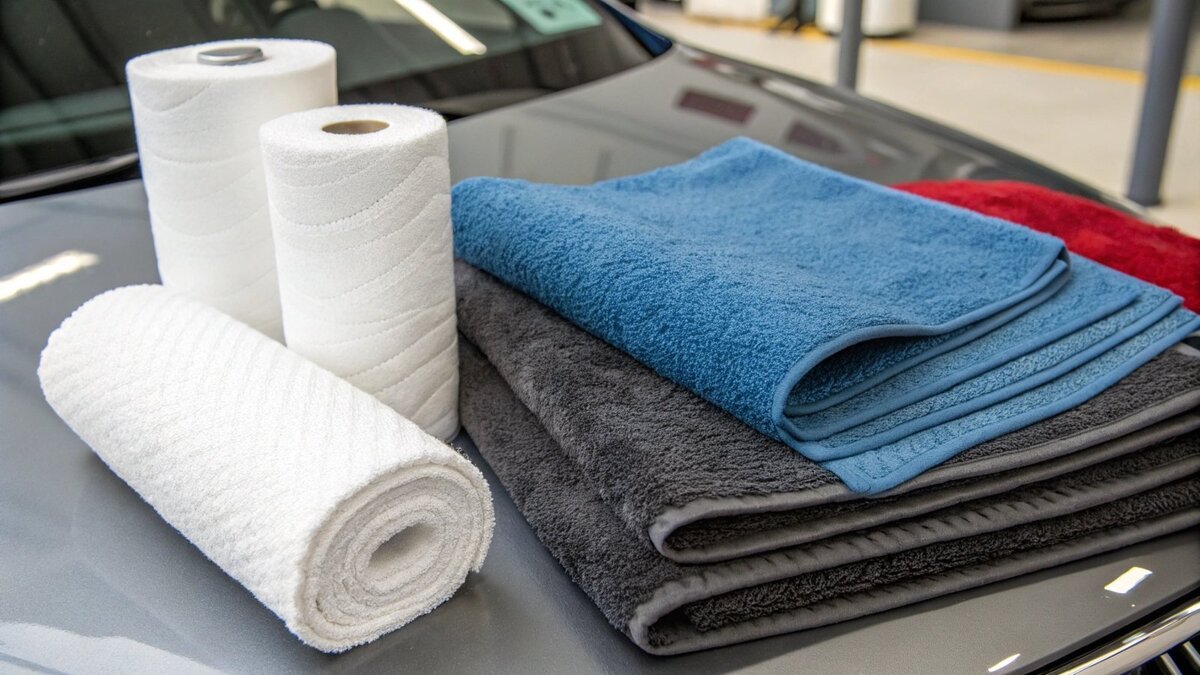
At TowelTrend, we get requests for all sorts of materials, but for automotive brands, we only recommend microfiber. After years of testing and manufacturing, it’s clear that nothing else combines safety, cleaning power, and durability so effectively. It is not just a trend; it is proven science. The unique star-shaped structure of the split fibers gives the material its ability to lift and trap particles. This is fundamentally different from all other textiles, which tend to push particles around on the surface. Pushing dirt is what causes scratches, period.
Materials to Absolutely Avoid
Many people reach for what’s convenient, but these materials are paint-killers. An old cotton bath towel has abrasive loops that drag grit. An old t-shirt is even worse; its worn fibers have no absorbency and just smear dirt around. And paper towels, made from wood pulp, are shockingly abrasive at a microscopic level. Using one on your car’s clear coat is like giving it a light sanding. Sticking with premium microfiber is the only way to ensure a scratch-free result.
| Material | Scratch Risk | Reason |
|---|---|---|
| High-Quality Microfiber | Extremely Low | Lifts and traps dirt away from the paint surface. |
| Cotton Terry Cloth | High | Coarse loops push grit into the paint. |
| Old T-Shirts | High | Abrasive fibers with no absorbency or trapping ability. |
| Paper Towels | Very High | Made from abrasive wood pulp that scratches clear coats. |
Conclusion
A quality microfiber towel is your best tool for a scratch-free finish. Remember, scratches come from trapped dirt and poor technique, not the towel itself. So choose wisely and wash carefully.