Skip to content
Your towels look clean, but that musty smell keeps coming back. This lingering odor often signals bacteria buildup, which can impact your brand’s image and your customers’ experience.
To effectively sanitize towels, wash them in hot water (above 60°C/140°F) with a quality detergent and a suitable disinfectant like white vinegar or oxygen bleach. It’s essential to dry them completely on a high heat setting immediately after washing to prevent new bacterial growth.
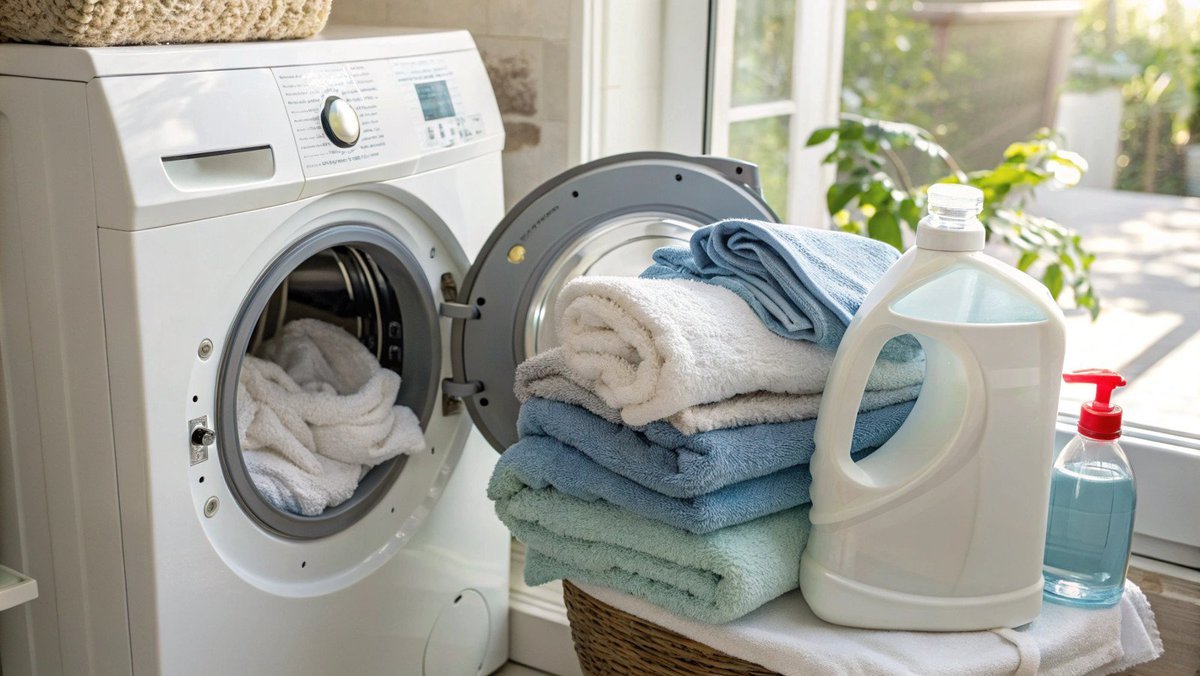
As the Marketing Director for TowelTrend since 2004, I’ve seen countless businesses invest in premium towels only to have them ruined by improper care. Sanitization isn’t just about a standard wash; it’s a specific process that protects the fabric’s integrity, color, and lifespan, especially in commercial settings like hotels, spas, and gyms. Getting this right is crucial for maintaining the quality your customers expect and protecting your investment. Let’s walk through the steps to ensure your towels are not just clean, but truly sanitized.
Can towels truly be sterilized?
You hear "sanitized" and "sterilized" used together, but they mean different things. Using the wrong term might mean you’re not getting the level of hygiene you think you are.
For towels, sanitizing is the practical and effective goal. It reduces germs to a safe level. Full sterilization kills all microbial life and typically requires clinical equipment like an autoclave, which is not practical or necessary for textiles like towels in most commercial settings.
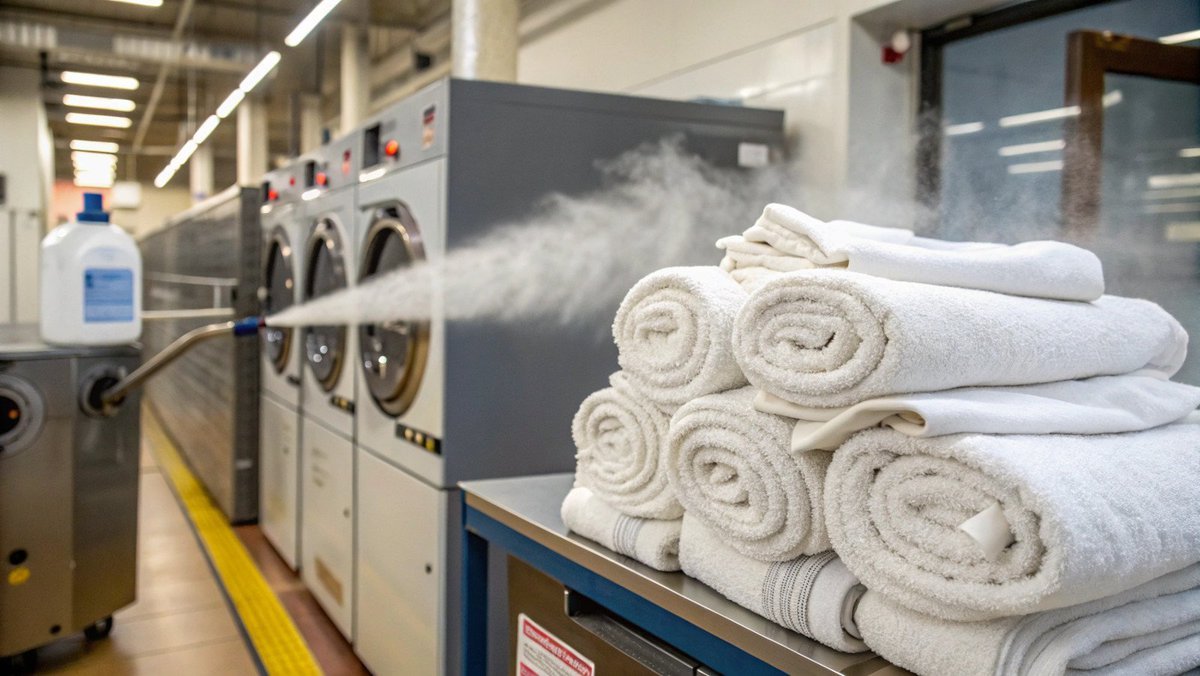
In my years in the textile industry, I’ve had to clarify this distinction for many clients. A hotel, spa, or gym needs sanitized towels, not sterilized ones. The goal is to eliminate harmful bacteria, mold, and viruses to a level that is safe for public use. True sterilization is an absolute state—the complete absence of life—and is generally reserved for medical instruments. Attempting to sterilize a towel with extreme methods would likely destroy the cotton fibers long before you reached a clinical standard. That’s why we focus on robust sanitization methods that are both effective and sustainable for high-quality fabrics.
Sanitization vs. Sterilization
The key difference lies in the level of microbial elimination. One is achievable in a laundry room; the other belongs in a lab or hospital. Understanding this helps you set realistic and effective hygiene standards for your business.
| Feature | Sanitization | Sterilization |
|---|---|---|
| Goal | Reduce microorganisms to a safe level | Eliminate all microorganisms |
| Method | Hot water, chemical disinfectants, thorough drying | Autoclave (steam/pressure), radiation, gas |
| Application | Commercial laundry, home use, kitchens | Medical instruments, laboratory equipment |
| Result | 99.9% reduction in specified bacteria | 100% elimination of all microbial life |
Why Material Choice Matters
At TowelTrend, we exclusively manufacture 100% cotton towels. The reason is simple: high-quality cotton is durable enough to withstand the repeated high-temperature washes required for proper sanitization. Cheaper blends or poor-quality cotton breaks down, losing its softness and absorbency. When we consult with a new brand, we always discuss their intended use and washing protocols. This ensures they choose a towel weight and construction that will last, protecting their brand reputation and reducing long-term replacement costs.
What is the best disinfectant for towels?
You want to kill germs, but you don’t want to destroy your towels in the process. Using the wrong chemical can fade colors and weaken fibers, turning a premium product into a faded rag.
For white towels, a chlorine-based bleach is highly effective. For colored towels, an oxygen-based (color-safe) bleach or a cup of white vinegar are the best choices. These options disinfect without stripping the dye, which is critical for maintaining your brand’s aesthetic.
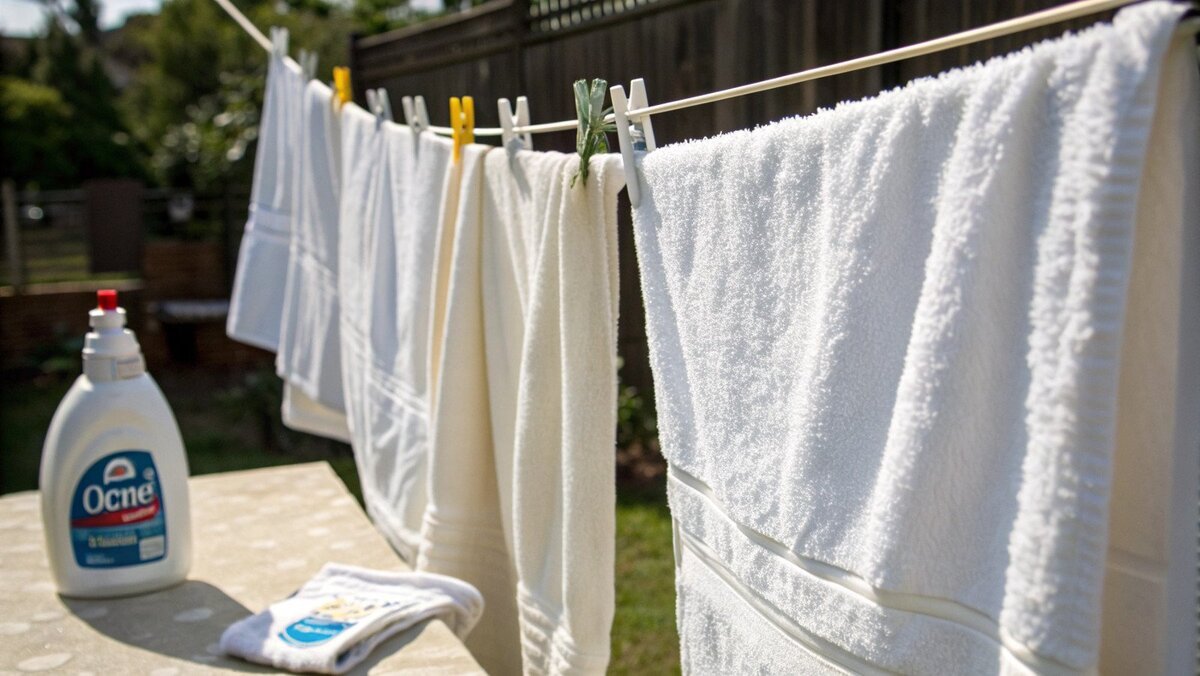
I’ve seen the unfortunate results of using the wrong disinfectant. A boutique hotel client once came to us after their beautiful, custom-dyed navy towels turned blotchy from improper bleaching. It was a costly mistake. This is why dye quality is so important. At TowelTrend, we use reactive dyes. These dyes form a molecular bond with the cotton fiber, making them incredibly resistant to fading. This gives our clients confidence that their towels will hold their color through the rigorous washing and disinfecting needed in a commercial environment.
Choosing Your Disinfectant
The right choice depends entirely on your towel color. Never use chlorine bleach on colored fabrics unless you are intentionally trying to remove the color.
| Disinfectant Type | Best For | How to Use | Cautions |
|---|---|---|---|
| Chlorine Bleach | White towels only | Add ½ cup to the bleach dispenser during the wash cycle. | Will remove color and can weaken fibers over time. |
| Oxygen Bleach | Colored and white towels | Add a scoop or as directed to the wash drum before adding towels. | Less harsh than chlorine bleach but very effective. |
| White Vinegar | Colored and white towels | Add 1 cup to the rinse cycle (fabric softener dispenser). | Helps kill germs, removes residue, but is not an EPA-registered disinfectant. |
| Pine Oil | Colored and white towels | Add a product like Pine-Sol to the wash cycle as directed. | Must contain at least 80% pine oil to be effective. Strong scent. |
The Natural Alternative
For many clients, especially those in the wellness and eco-friendly space, using harsh chemicals is not an option. In these cases, we always recommend a combination of hot water (above 60°C / 140°F) and white vinegar. The heat does the heavy lifting of killing most bacteria and viruses, while the vinegar helps break down soap residue and kill mold spores. It’s a simple, effective, and fabric-safe method that aligns with a natural brand ethos.
How do you really disinfect towels step-by-step?
You wash your towels regularly, but they still don’t feel completely fresh. A standard wash cycle is often not enough to kill the germs and remove the buildup that causes odors.
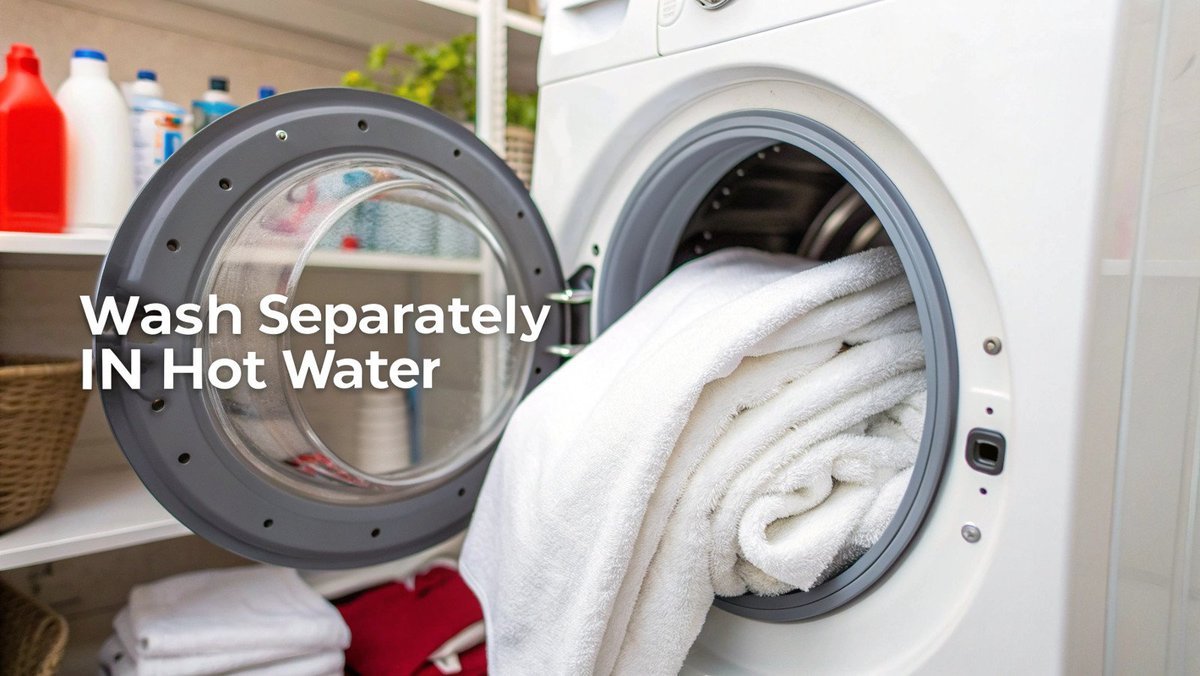
To truly disinfect towels, wash them separately in the hottest water the fabric can safely handle. Add your detergent and a suitable disinfectant. Finally, dry them immediately and completely on a high heat setting to kill any remaining microbes.
One of the most common issues new clients face is a decline in towel absorbency. They often blame the towel, but 9 times out of 10, the culprit is residue from too much detergent or fabric softener. I always give them this advice: use half the recommended amount of detergent and use vinegar in the rinse cycle instead of softener. Fabric softeners coat cotton fibers with a waxy film that repels water—the exact opposite of what a towel should do. Following a proper sanitizing method not only keeps towels hygienic but also maintains their performance.
The Step-by-Step Sanitizing Protocol
-
Separate Your Load: Always wash towels separately from other laundry. This prevents the transfer of germs and lint, and it allows you to use the high heat settings that other garments can’t handle.
-
Do Not Overload: Towels need room to agitate in the water to get clean. Stuffing the machine reduces cleaning effectiveness and can leave residue behind. Wash in manageable loads.
-
Select High Heat: Set your washing machine to its hottest water setting. Hot water (at least 60°C / 140°F) is essential for killing most bacteria, viruses, and mold spores.
-
Add Detergent & Disinfectant: Add your detergent (use slightly less than recommended) and your chosen disinfectant (chlorine bleach for whites, oxygen bleach or vinegar for colors) according to the machine and product directions.
-
Use an Extra Rinse: If your machine has an "extra rinse" option, use it. This is a pro tip I share with all our clients. It helps ensure all traces of detergent and soil are washed away, leaving the cotton fibers clean, thirsty, and absorbent.
-
Dry Immediately and Thoroughly: This step is non-negotiable. Damp towels are a perfect breeding ground for mildew and bacteria. As soon as the wash cycle ends, transfer the towels to the dryer and run it on a high heat setting until they are completely dry.
Do bacteria stay on towels even after washing?
You trust that your washing machine is making your towels clean. The hard truth is that if done wrong, a wash cycle can simply give bacteria a "warm bath" before they go right back into circulation.
Yes, bacteria can easily survive a wash cycle. This happens if the water is too cold, you don’t use a disinfectant, you overload the machine, or you let wet towels sit. These common mistakes can turn your laundry machine into a breeding ground for germs.
This is a major concern for our B2B clients, as hygiene is directly tied to their reputation. I remember a gym owner who was struggling with customer complaints about smelly towels. He was washing them in cold water to save energy. I explained that a cold wash, especially without a disinfectant, wasn’t killing the bacteria from sweat; it was just spreading it around. We switched him to a hot water protocol, and the problem vanished. This is also why we emphasize the importance of certifications like OEKO-TEX®, which guarantee the towel is free from harmful chemicals from the start. It provides a baseline of safety before the towel even sees a washing machine.
Why Your Wash Might Be Failing
Understanding the common pitfalls is the first step to ensuring a truly hygienic wash every time. These mistakes are easy to make but also easy to fix.
| Common Mistake | Why It’s a Problem | The Correct Method |
|---|---|---|
| Using Cold Water | Cold water does not kill most bacteria or mold. It can just move germs from one towel to another. | Use hot water (60°C / 140°F or higher) to effectively kill germs. |
| Overloading the Washer | Towels can’t agitate freely, trapping dirt and bacteria. Detergent can’t circulate properly. | Wash smaller loads to allow for proper movement and rinsing. |
| Letting Wet Towels Sit | A damp, warm washing machine is the perfect environment for mold and bacteria to multiply rapidly. | Transfer towels to the dryer immediately after the wash cycle finishes. |
| Not Drying Completely | Even slight dampness allows mildew to grow, causing that musty smell to return quickly. | Dry on high heat until the towels, including the thick seams, are bone dry. |
It’s a simple process: effective sanitization relies on a combination of heat, chemistry, and proper procedure. Skipping any one of these steps compromises the result. By adopting these best practices, you ensure the health and safety of your users and extend the life of your high-quality towels.
Conclusion
Properly sanitizing towels is straightforward. Use hot water, the right disinfectant for the fabric, and dry them thoroughly right away. These steps protect your investment and keep towels hygienic for every use.