Skip to content
Tired of leaving swirl marks and water spots after a wash? This can ruin your car’s finish. The right towel ensures a fast, safe dry and a flawless, showroom shine every time.
A high-quality, plush microfiber towel with a high GSM (grams per square meter) is the best for drying a car. For maximum absorption and a scratch-free finish, choose a large towel with a twisted loop or waffle weave design specifically made for automotive use.
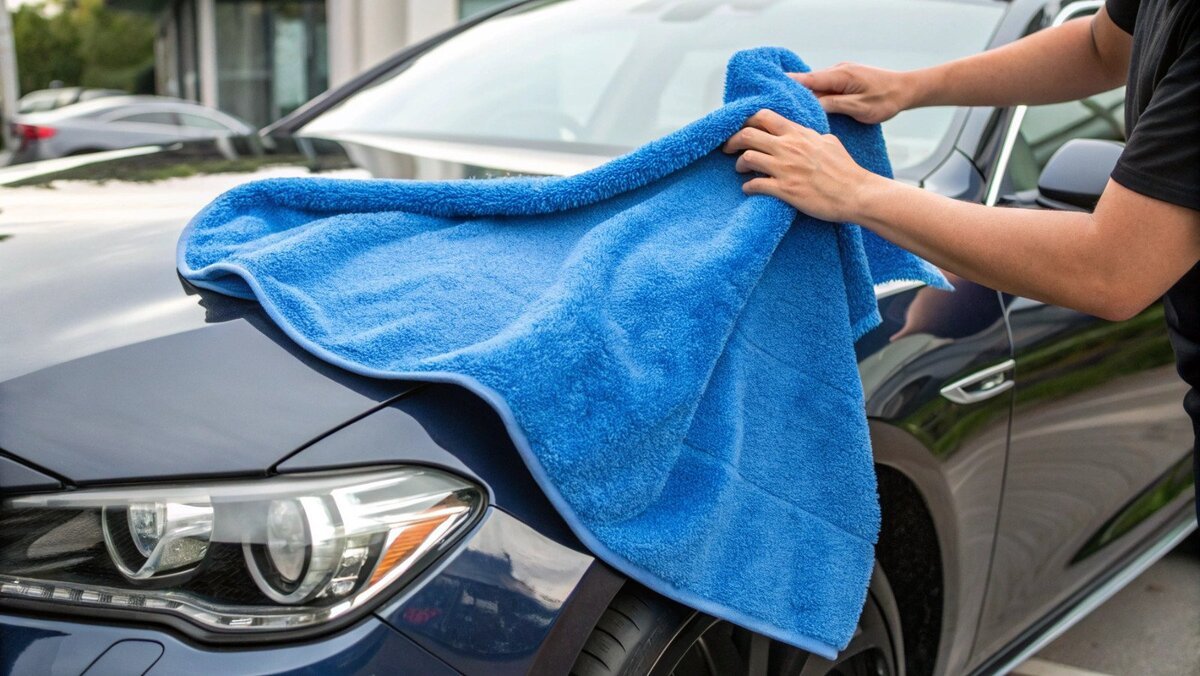
Now you know that microfiber is the way to go. But not all microfiber towels are created equal. The details—like the weave, the blend, and the edges—make a huge difference between a perfect finish and a disappointing one. As a towel manufacturer, I’ve seen exactly what separates a premium towel from a cheap one. Let’s dive deeper into the specific types of towels so you can choose the absolute best option for your car or your brand’s product line.
What kind of towel should I dry my car with?
Are you confused by all the different car drying towels out there? Choosing the wrong one means a streaky finish and can even scratch your paint. Let’s look at the features you need.
You should use a microfiber towel with a high GSM (grams per square meter), ideally above 500. The best designs are waffle weave or twisted loop, as they are engineered for maximum water absorption and a lint-free finish without damaging your car’s clear coat.
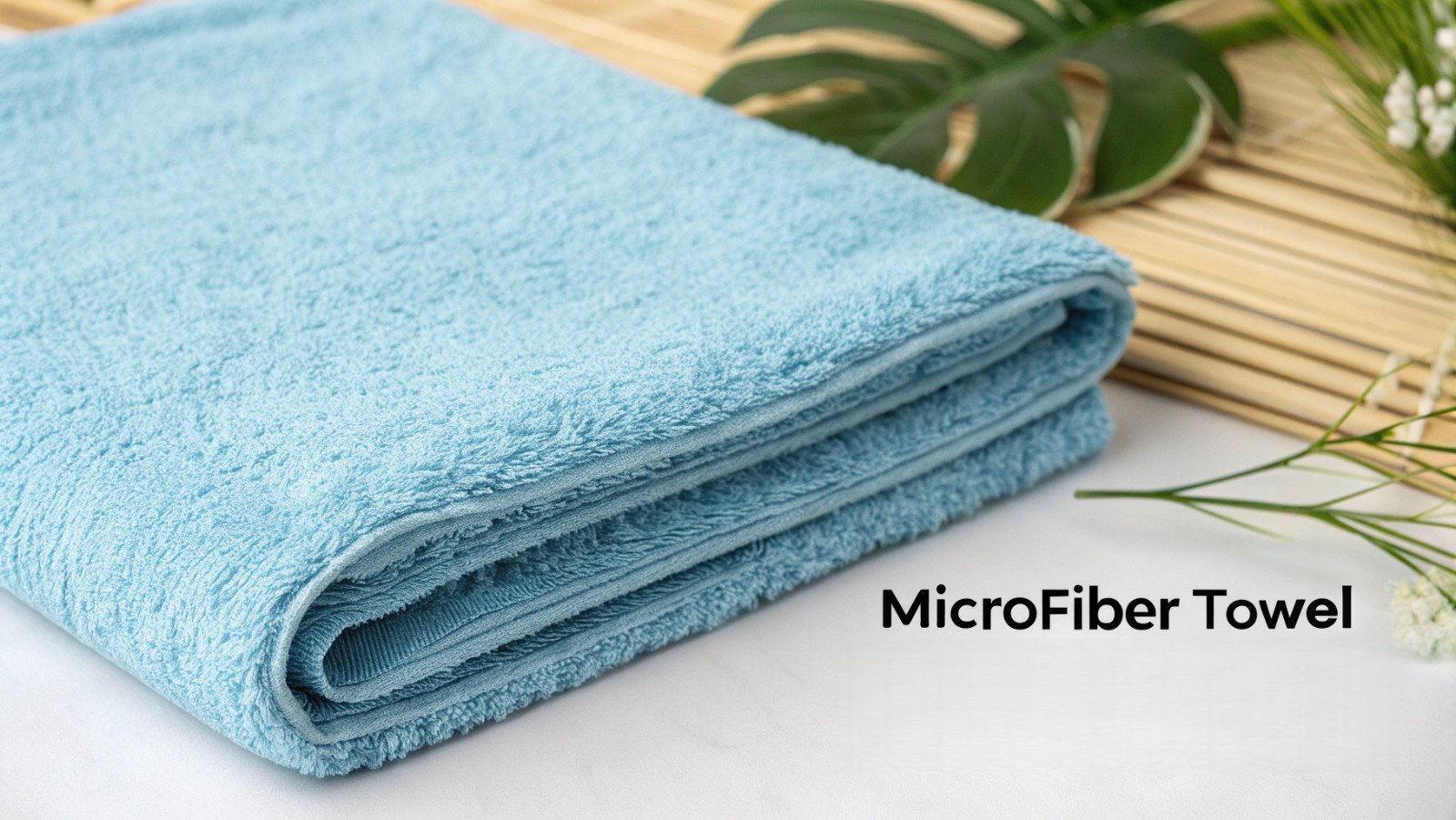
When we started manufacturing towels back in 2004, the options were simple. Today, the technology has advanced significantly. For our clients in the automotive care industry, we always focus on three key specifications that make a towel great for drying cars. Understanding these will help you make a much more informed decision, whether you’re buying one towel or ordering 500 for your new brand.
Understanding GSM
GSM stands for Grams per Square Meter. It’s a measure of the towel’s density and weight. For car drying, a higher GSM is better. A towel with a low GSM, like 200-300, is thin and won’t absorb much water. You’ll be wringing it out constantly. A towel with a high GSM, say 500 to 1200, is thick, plush, and can hold a huge amount of water, often enough to dry an entire car without being wrung out.
The Importance of the Blend
Microfiber towels are typically made from a blend of polyester and polyamide. Polyester provides the structure and durability, while polyamide provides the softness and absorption. A common blend is 80% polyester and 20% polyamide (80/20). For premium drying towels, a 70/30 blend is even better. The higher polyamide content makes the towel softer and more absorbent, which is safer for your car’s paint.
Edge Design Matters
| The edge of the towel can be a hidden source of scratches. Many cheap towels have a simple, hard-stitched edge that can mar your clear coat. Look for towels with soft edges. | Edge Type | Description | Scratch Risk |
|---|---|---|---|
| Edgeless | Cut with ultrasonic waves, no stitching. | Lowest | |
| Satin/Silk Banded | A soft, silky fabric is stitched around the edge. | Very Low | |
| Stitched Edge | A simple overlock stitch. | High |
At TowelTrend, we advise our clients to always choose a satin-banded or edgeless design for their automotive lines. It’s a small detail that shows a commitment to quality and protects the end-user’s vehicle.
Which cloth is best for drying a car?
You’ve probably heard of microfiber, cotton terry, and chamois cloths. But which one is truly the best and won’t harm your car’s delicate paint? Let’s compare them to find the clear winner.
The best cloth is a high-quality microfiber drying towel. It is far better than cotton terry cloth and chamois in terms of safety, absorbency, and leaving a streak-free finish. Its soft, split fibers safely trap any remaining dirt particles away from the paint surface.
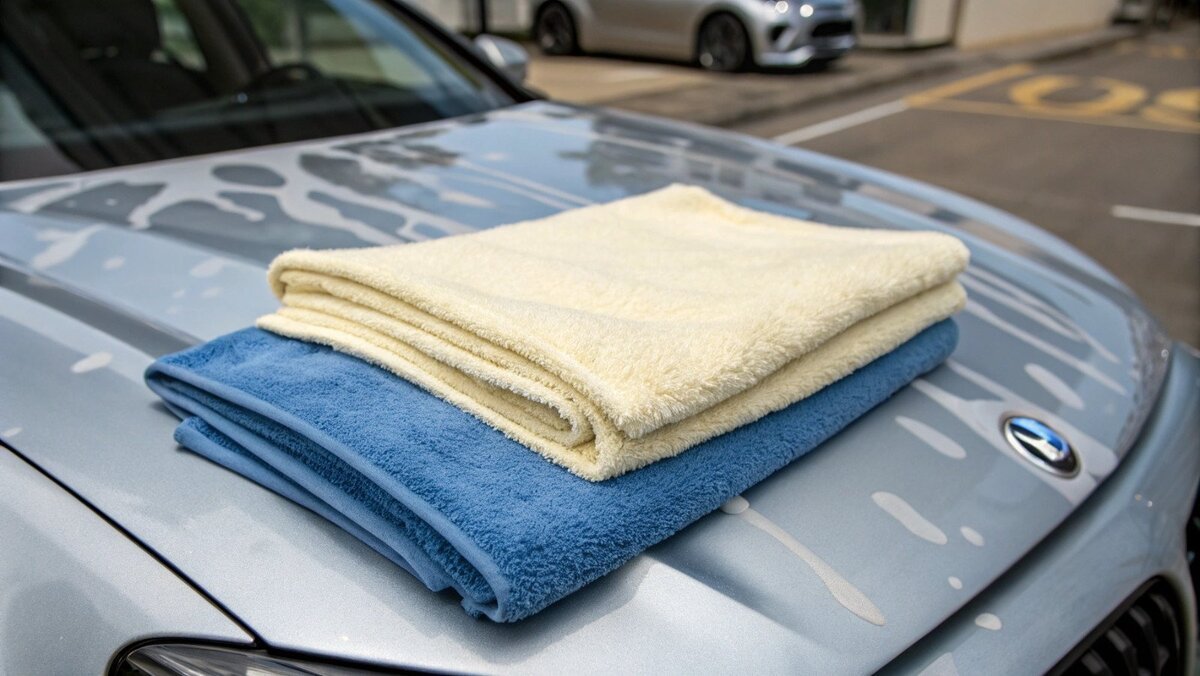
In my years in the textile industry, I’ve seen trends come and go, but the move towards microfiber for automotive care is based on pure performance. Clients sometimes ask us to produce cheaper cotton options to hit a low price point, but I always explain the risk. Using the wrong material can damage a customer’s car, and that damage is tied directly back to your brand. Here’s a simple breakdown of why microfiber has become the industry standard.
Microfiber: The Modern Champion
Modern microfiber towels are designed at a microscopic level for cleaning and drying. The fibers are split, creating a massive surface area and a static charge that pulls in water and dust. This structure lifts particles away from the paint, preventing the swirl marks you get from dragging grit across the surface. They are super absorbent and easy to care for.
What About Cotton Terry Towels?
A standard cotton bath towel might seem like a good idea, but it’s one of the worst things you can use. Cotton fibers are large and loopy. They don’t absorb water as quickly as microfiber, and they tend to push water around. Worse, they can leave behind lint and, if there’s any tiny piece of grit on the car, the cotton fibers will drag it across the paint, causing fine scratches.
The Chamois Legacy
Natural chamois (made from sheepskin) and synthetic PVA chamois were the go-to options for decades. They absorb water well, but they have a major flaw: they have a flat surface. If there is any dirt left on the car, a chamois will trap it against the paint and drag it along as you dry, creating long, fine scratches. Microfiber’s pile lifts that dirt away from the surface, making it much safer.
| Cloth Type | Absorbency | Safety (Scratch Risk) | Key Feature |
|---|---|---|---|
| Microfiber | Excellent | Very Low | Lifts dirt away from paint |
| Chamois | Good | Medium | Can drag dirt across paint |
| Cotton Terry | Fair | High | Leaves lint, drags dirt |
Is microfiber or chamois better for drying cars?
It’s the classic debate in car care: traditional chamois versus modern microfiber. Picking the wrong one can lead to frustration, more work, and a finish that is not perfect. Let’s settle this with facts.
Microfiber is much better than chamois for drying cars. It absorbs more water faster, is significantly softer on paint to prevent scratches, and doesn’t need to be stored damp. Modern microfiber technology has completely surpassed the performance of traditional chamois.
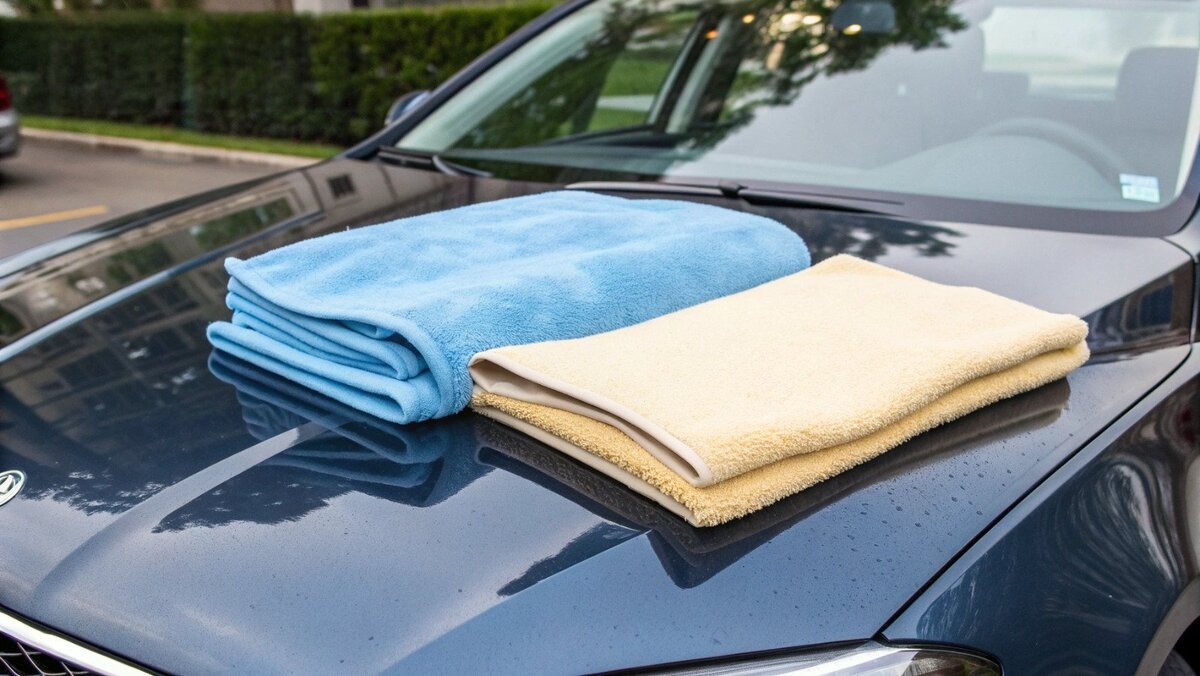
I remember my dad washing his car on weekends. He had this old, stiff natural chamois that he kept in a plastic tube. It took so much effort to wring out and use. When I first got into the textile business and brought him a plush, 1000 GSM microfiber drying towel, he was amazed. He dried the entire car in half the time with a single towel. This personal experience perfectly shows how technology has improved such a simple task. Let’s look at why microfiber is the clear winner.
How Microfiber Works
The magic of microfiber is in its structure. Each fiber is 100 times finer than a human hair and is split into wedge-shaped strands. This creates millions of tiny pockets to trap water and dirt. This is why a good microfiber towel can absorb 7 to 10 times its weight in water. The split fibers also create a gentle polishing action, buffing the surface as it dries for a better shine.
The Limitations of Chamois
A chamois, whether natural or synthetic, works by absorption through a smooth surface. It doesn’t have the pile or fiber structure of microfiber. This means any speck of dust or grit missed during the wash gets trapped between the flat chamois and your paint. As you wipe, you are basically sanding your car’s finish with that grit. Also, natural chamois needs to be stored damp to stay soft, which can lead to mildew and a bad smell. If it dries out, it becomes stiff and brittle.
Care and Longevity
Microfiber towels are incredibly easy to care for. You can just throw them in the washing machine. Just be sure to wash them separately from other fabrics (especially cotton), use a dedicated microfiber detergent, and never use fabric softener, which clogs the fibers. A quality microfiber towel will last for hundreds of washes, making it a durable and cost-effective choice for both enthusiasts and businesses.
What is the best streak free towel for drying cars?
Are you tired of washing your car, only to find ugly streaks and water spots left behind? This can make all your hard work feel wasted. The secret to a perfect, streak-free finish is in the towel’s weave.
The best streak-free towel for drying a car is a waffle weave microfiber towel. Its unique, pocketed texture is designed to quickly trap water and buff the surface dry without leaving behind any lint or streaks, making it a favorite among professional detailers.
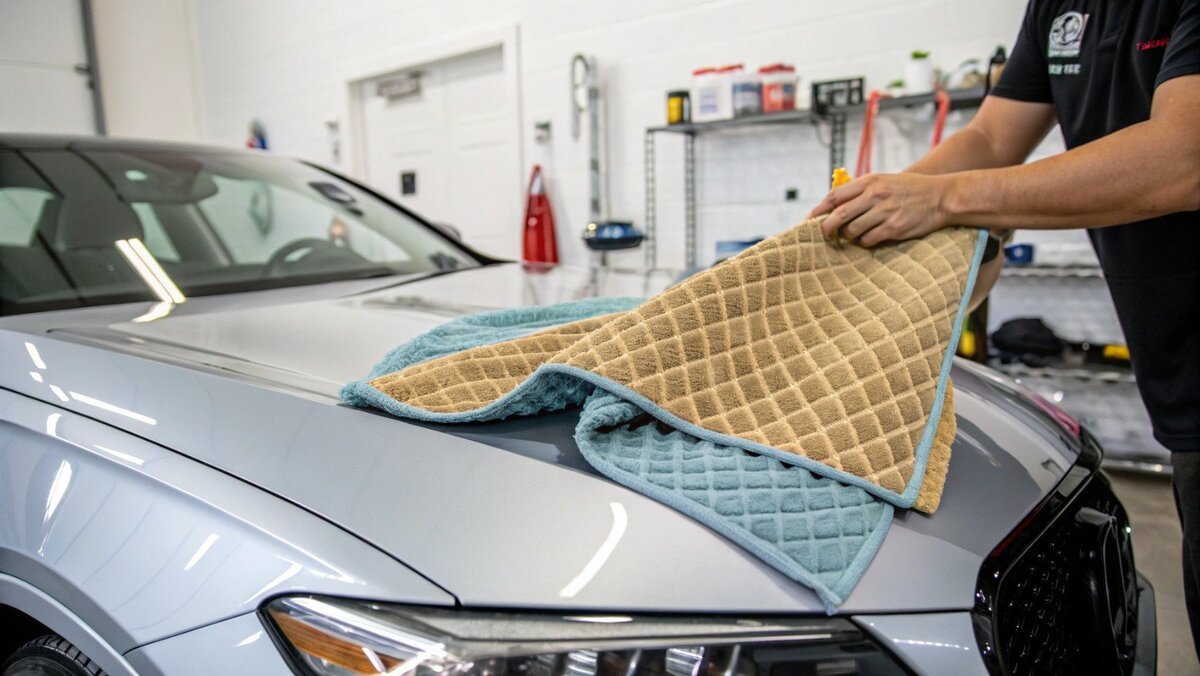
When a client wants to launch a car care brand, one of their first questions is about performance. "How do we guarantee a streak-free finish?" they ask. My answer always comes down to the weave of the towel. Not all microfiber is the same. The way the fibers are woven together drastically changes how the towel interacts with water on a surface. At TowelTrend, we can produce towels with any weave, but for drying, two types stand out as the clear champions.
Waffle Weave
This is the go-to for a guaranteed streak-free finish, especially on windows and dark-colored cars. Waffle weave towels have a distinctive pattern of recessed pockets. These pockets trap water and increase the surface area of the towel, allowing it to absorb liquid very quickly. As you glide the towel across the surface, the raised waffle ridges act like squeegees, whisking water into the pockets and leaving a dry, clean path behind.
Twisted Loop Weave
This is the heavyweight champion of absorption. Twisted loop towels have long, thick fibers that are twisted into loops. Think of them as thousands of tiny, soft caterpillar-like strands. These loops give the towel an incredible capacity to soak up water, making it perfect for the "one-pass dry" method where you lay the towel on a large panel, like a roof or hood, and simply drag it off. It pulls nearly all the water with it. While excellent for absorption, a high-quality blend is crucial to ensure it remains completely streak-free.
| Weave Type | Primary Use | Absorption Speed | Best For |
|---|---|---|---|
| Waffle Weave | Streak-free drying | Fast | All-around drying, glass, final wipe |
| Twisted Loop | Maximum absorption | Very Fast | Large panels, one-pass drying |
| Plush/High Pile | Buffing, waterless wash | Good | Removing wax, quick detailing |
For brands starting out, I often recommend offering both a waffle weave and a twisted loop towel. This gives customers a choice based on their preferred drying method. And with our low MOQ of 500 pieces, it’s easy for a brand to test both styles in their market.
Conclusion
For a perfect, scratch-free finish, a high-GSM waffle weave or twisted loop microfiber towel is the best choice for drying your car. It is safer, more absorbent, and more effective.