Skip to content
Your brilliant white towels look dull and yellow, making them seem old and unhygienic. This common problem can be frustrating, but understanding the cause is the key to fixing it.
The main reasons white towels turn yellow are residue buildup from detergents, body oils, and hard water minerals. Over-drying with high heat and using chlorine bleach improperly can also cause a chemical reaction that results in a yellow tint, breaking down the fabric’s optical brighteners.

Seeing a stack of once-pristine white towels fade to a dingy yellow is disappointing for any business owner. It can make your establishment look less clean and professional. But don’t throw those towels out just yet. This yellowing is rarely permanent. It’s simply a sign that your laundry process needs a few adjustments. The good news is that you can reverse the damage and prevent it from happening again. Let’s dive into exactly why this occurs and how you can restore your towels to their original, brilliant white.
Why do my towels turn yellow?
You invested in high-quality white towels, but they’re still becoming discolored. It feels like a waste of money and can reflect poorly on your standards of cleanliness and care.
Towels turn yellow mainly because of residue that traps dirt. This includes body oils, sweat, and excess detergent or fabric softener. In areas with hard water, mineral deposits like iron also build up on the fibers, causing a distinct yellow or rust-colored stain.
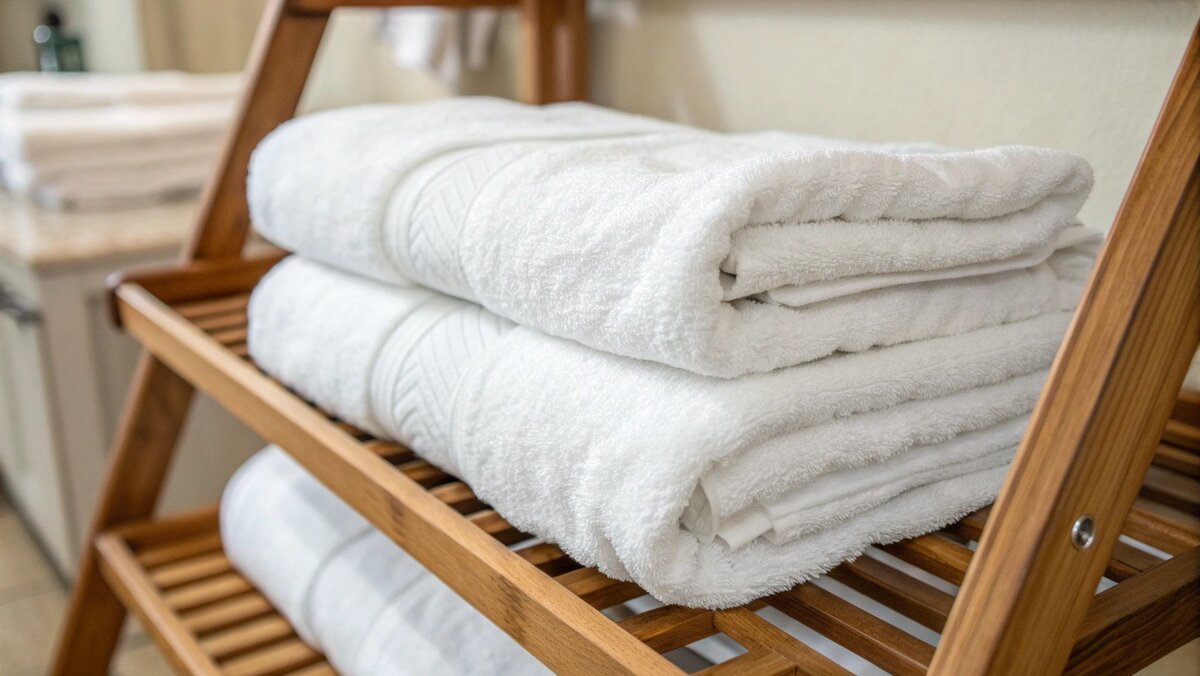
Over my years at TowelTrend, I’ve seen this issue countless times. A client will call, frustrated that the beautiful white towels we supplied them have lost their luster. The cause almost always comes down to what happens in the wash, not the towel itself. It’s a buildup problem. Think of each cotton fiber as a tiny magnet for residue. When oils, minerals, and laundry products accumulate, they oxidize and create that ugly yellow hue. It’s a gradual process, but it’s completely avoidable once you know what to look for. Let’s break down the main culprits.
The Most Common Causes of Yellowing
| Cause | How It Works | The Solution |
|---|---|---|
| Detergent & Softener Buildup | Using too much product leaves a waxy film on the fibers. This film acts like sticky tape, trapping dirt and body oils in the fabric. Fabric softeners are especially known for this. | Use about half the recommended detergent amount. Replace liquid softener with 1/2 cup of white vinegar in the rinse cycle. |
| Body Oils & Sweat | Sebum (natural skin oil) and sweat are protein-based. If not washed out completely in hot water, they can build up and oxidize over time, turning yellow. | Always wash towels in hot water. Pre-soak heavily soiled towels to help break down oils before the main wash cycle. |
| Hard Water Minerals | If your water has a high mineral content, elements like iron and magnesium get deposited onto the fabric. Iron is a major cause, as it literally rusts on the fibers. | Use a water-softening additive or install a water softening system. Avoid chlorine bleach, as it accelerates the reaction with iron. |
| Over-Drying & High Heat | Excessive heat can scorch the natural cotton fibers, giving them a yellowed, burnt appearance. It also breaks down the fabric, making it feel rough and brittle. | Tumble dry on a medium or low heat setting. Remove towels when they are about 95% dry and let them air-dry the rest of the way. |
How to get yellow towels white again?
You have a stack of yellowed towels that look old and unprofessional. Throwing them away is an expensive option, but using them can damage your brand’s reputation for quality and cleanliness.
To whiten yellow towels, soak them for several hours in hot water with an oxygen-based bleach like OxiClean or a half-cup of baking soda. Then, wash them in hot water with your detergent and a half-cup of white vinegar instead of fabric softener.
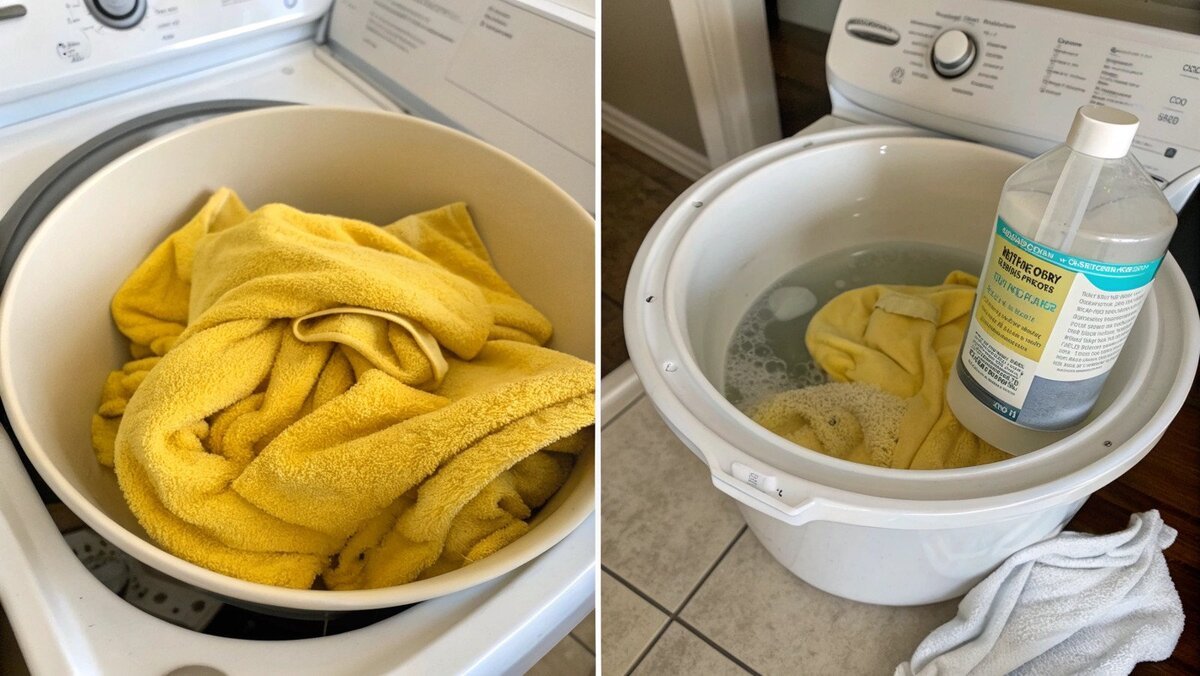
Many people’s first instinct is to reach for chlorine bleach, but as a textile expert, I advise against it. It can actually make the problem worse. A much better approach is what we call "laundry stripping." This process uses safer ingredients to break down and remove the residue that’s causing the discoloration. I once helped a boutique hotel client revive an entire inventory of towels they were about to replace. They were amazed that a simple, non-damaging soak could make such a huge difference. Here is the step-by-step method we recommend at TowelTrend to bring your towels back to life.
A Step-by-Step Whitening and Stripping Process
-
Start with a Pre-Soak. Find a bathtub, large basin, or top-loading washing machine. Fill it with the hottest water possible. Add either one scoop of an oxygen-based bleach (like OxiClean or Nellie’s Oxygen Brightener) OR a half-cup of baking soda. Stir to dissolve the powder. Submerge your yellowed towels completely and let them soak for at least four hours, or preferably overnight for severe discoloration. You will likely see the water turn a murky brown—that’s all the residue leaving the fabric!
-
Run a Vinegar Wash. After soaking, transfer the wet towels to your washing machine (don’t add any new towels). Add a small amount of your regular, high-quality liquid detergent—about half of what you’d normally use. Next, pour a half-cup of distilled white vinegar into the fabric softener dispenser. The vinegar works to break down any remaining mineral and detergent buildup.
-
Use a Hot Cycle with an Extra Rinse. Wash the load on a hot water setting. The heat is crucial for dissolving oils and killing bacteria. Be sure to select the "extra rinse" option on your machine. This ensures all the loosened grime, detergent, and vinegar are completely washed away, leaving nothing behind on the fibers.
-
Dry on Low Heat. Tumble dry the towels on a low or medium heat setting. High heat can scorch cotton fibers and reverse your hard work. Shake the towels out before putting them in the dryer to help fluff the fibers.
Can bleach turn white towels yellow?
You see your towels yellowing, so you add chlorine bleach to the wash, hoping to whiten them. But to your surprise, they come out looking even more yellow than before.
Yes, chlorine bleach can absolutely turn white towels yellow. This happens when the bleach reacts with minerals in hard water, particularly iron, creating rust deposits. It can also react with body oils and sweat that haven’t been fully washed out, intensifying stains.
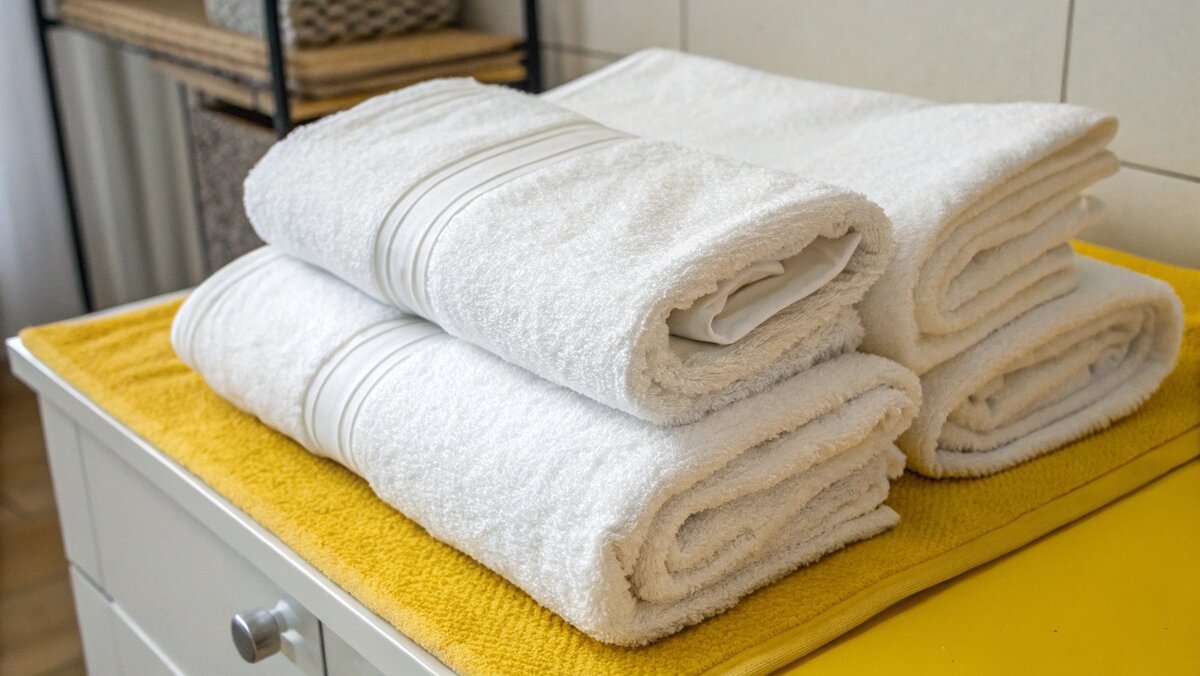
This is one of the most common laundry mistakes I see people make. When we onboard a new private label client at TowelTrend, one of the first things I discuss is their laundry care instructions. I always recommend they explicitly advise their customers to avoid chlorine bleach on their towels. While it’s known as a whitener, its chemical properties can be very destructive to modern textiles. The optical brightening agents (OBAs) that we add during manufacturing to make whites look crisp and bright are especially vulnerable. Chlorine bleach strips them away, revealing the natural, slightly yellowish color of raw cotton and making the towel look dull.
The Bleach and Yellowing Connection
So why does a product designed to whiten sometimes do the opposite? The issue lies in chemical reactions.
-
The Reaction with Hard Water: If your water source contains high levels of iron, chlorine bleach acts as an oxidizer. It turns the dissolved iron into iron oxide—which is just a fancy name for rust. This rust then gets deposited directly onto your towels, leaving them with that stubborn yellow or brownish tint. You are essentially dyeing your towels with rust.
-
The Reaction with Proteins: Body oils, sweat, and certain lotions contain proteins. If these aren’t fully removed before you add bleach, the chlorine can cause a chemical reaction that makes these invisible residues visible as yellow stains.
-
The Damage to Optical Brighteners: Manufacturers use OBAs to absorb UV light and emit it in the blue-white spectrum, making fabrics appear "whiter than white." Chlorine bleach is harsh and breaks down these molecules. Once they are gone, the underlying natural color of the cotton fibers shows through, which is a soft yellow-ivory.
Instead of chlorine bleach, always opt for an oxygen-based bleach. It whitens gently without these negative reactions.
How do hotels keep their towels so white and soft?
You check into a hotel and notice the towels are always perfectly white and wonderfully fluffy. Meanwhile, your own towels at home or your business feel stiff and look a little dingy.
Hotels keep towels white by using a precise, professional laundering formula. They use commercial-grade detergents, consistently hot water (140-160°F), and timed drying cycles. Crucially, they avoid fabric softeners, which cause buildup, and instead use specific sours in the final rinse to balance pH and soften fibers.
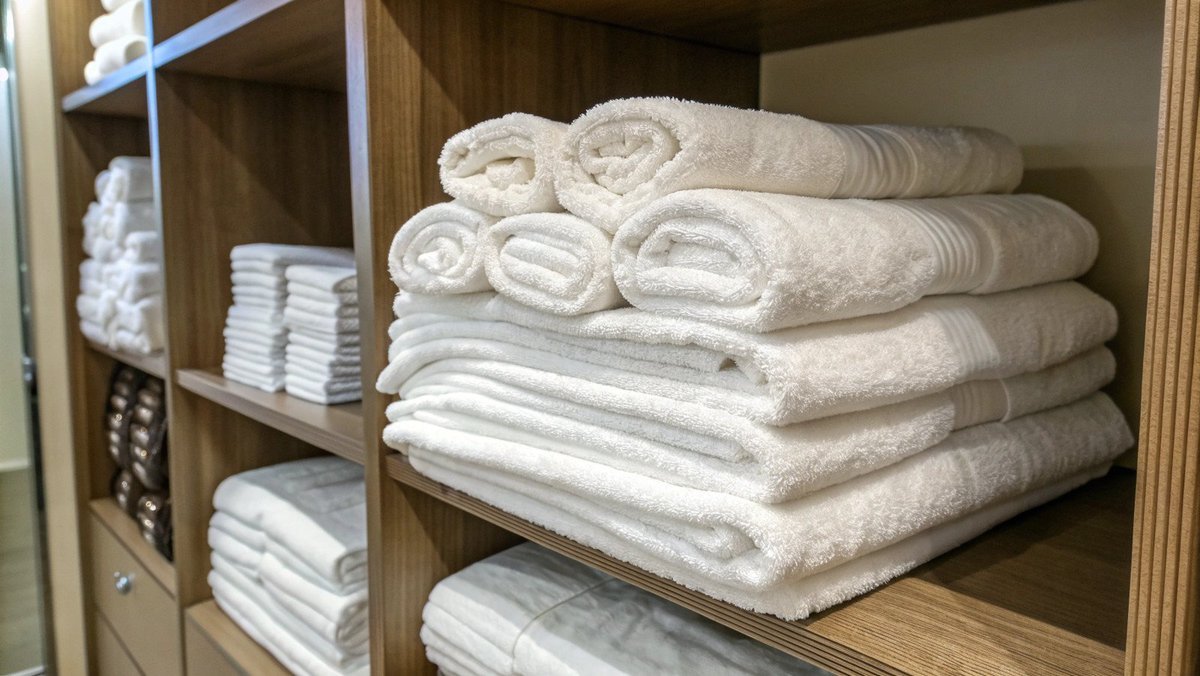
Having supplied towels to the hospitality industry for over a decade, I can tell you there’s no single magic trick. Their secret is consistency and treating laundry like a science. Commercial laundries that service hotels don’t just toss everything in a machine with a cup of detergent. They use programmable machines that inject specific chemicals at precise moments in the wash cycle. They never overload machines, allowing towels to move freely and rinse thoroughly. They also have a strict sorting policy—whites are always washed alone. Finally, they know when to retire a towel. Even with perfect care, a towel has a limited lifespan in a high-turnover environment.
The Hotel Laundry Formula vs. Home Laundering
The difference between hotel results and typical results often comes down to a few key process differences. Hotels prioritize removing everything from the towel, while home users often unknowingly add residue.
| Feature | The Hotel Laundry Process | The Common Home Process |
|---|---|---|
| Water Temperature | Consistently Hot (140-160°F / 60-70°C) to kill germs and dissolve oils. | Often warm or cold to save energy, which is less effective on oils. |
| Detergent | High-efficiency, low-sudsing detergents are precisely measured. | Consumer-grade detergents are often overused, leaving behind residue. |
| Softening Method | Fabric softener is avoided. A "sour" rinse (mild acid) is used to neutralize pH and soften fibers naturally. | Heavy use of liquid fabric softeners or dryer sheets that coat fibers. |
| Drying | Towels are dried in large dryers but are often slightly under-dried and folded while warm to finish by air, preventing scorching. | Often over-dried on high heat, which damages cotton fibers and makes them stiff. |
| Load Management | Machines are loaded to about 80% capacity to ensure proper cleaning and rinsing. | Machines are frequently overloaded, preventing effective washing and rinsing. |
By adopting some of these principles—like using hot water, cutting back on detergent, and swapping softener for vinegar—you can get much closer to that hotel-quality finish.
Conclusion
Keeping white towels bright is simple with the right laundry habits. Use less detergent, switch fabric softener for white vinegar, wash in hot water, and choose oxygen bleach over chlorine bleach.